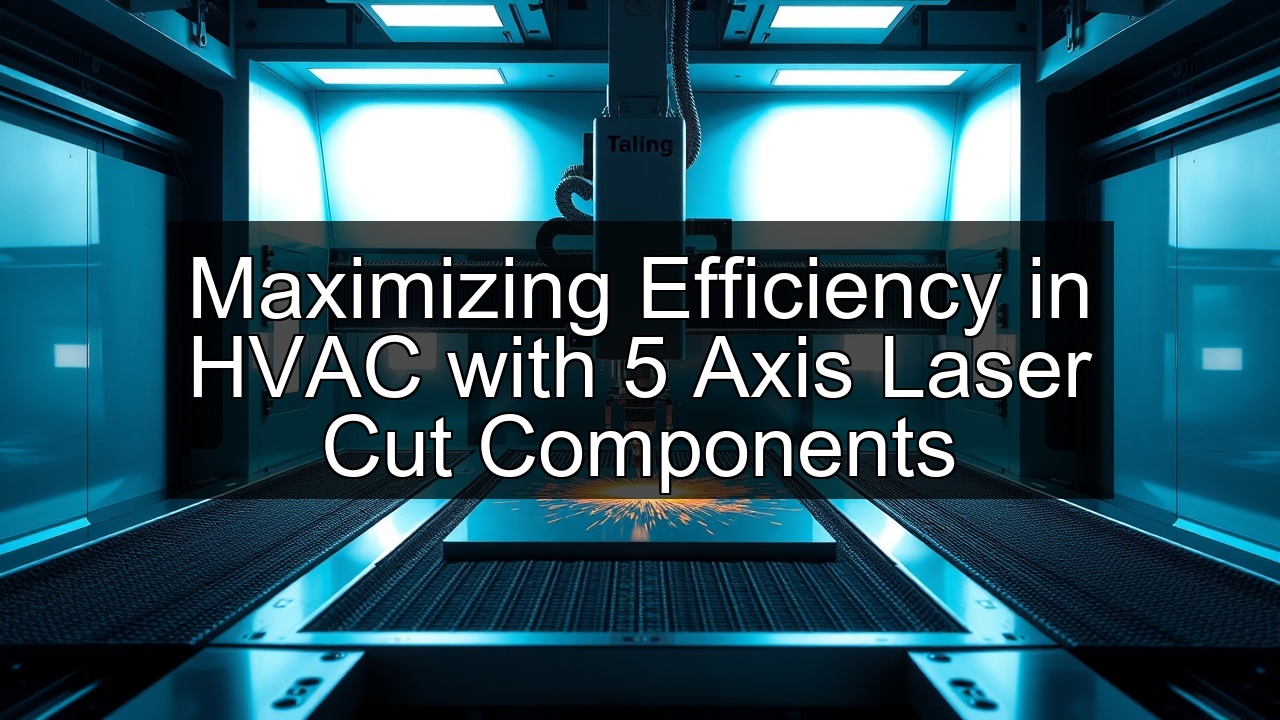
Maximizing Efficiency in HVAC with 5 Axis Laser Cut Components
Understanding 5 Axis Laser Cutting Technology
Introduction to 5 Axis CNC Laser Cutting
5 axis laser cutting technology revolutionizes the fabrication of metal components by providing unmatched precision and versatility. Unlike traditional 2D laser cutting methods, 5 axis CNC laser cutting allows for intricate designs and complex geometries. This technology manipulates the laser cutter along five different axes, enabling it to move not just in the X and Y directions, but also in the Z direction, along with rotating around two additional axes. This capability is crucial for achieving angles and contours that conventional cutting methods cannot replicate. Industries such as HVAC leverage this technology to create components that fit seamlessly into a wide range of applications, from ductwork to custom fittings.
How 5 Axis Enhances Precision in Metal Fabrication
The precision offered by 5 axis laser cutting significantly elevates the quality of metal fabrication. By controlling the laser beam's movement in multiple dimensions, manufacturers can achieve tighter tolerances and smoother finishes. This level of accuracy is particularly important in HVAC systems, where the fit and function of components directly impact system efficiency. With 5 axis capabilities, laser cutters can execute intricate cuts and fine details on materials like stainless steel and aluminum, which are commonly used in HVAC. The result is a final product that meets exact specifications, reducing the likelihood of costly errors during installation and operation.
Applications of 5 Axis Laser Cutting in HVAC Systems
5 axis laser cutting finds extensive applications within the HVAC industry, enhancing various components' design and functionality. Manufacturers employ this technology to produce duct fittings, brackets, and custom housings that require precise specifications. The ability to cut complex shapes helps in the creation of lightweight yet durable components, which contribute to improved energy efficiency in HVAC systems. Additionally, 5 axis laser cutting allows for seamless integration of parts, facilitating easier assembly and reducing the need for additional processes like welding or metal forming. As the demand for energy-efficient HVAC solutions rises, the relevance of 5 axis technology in producing optimized components cannot be overstated.
Benefits of 5 Axis Laser Cut Components in HVAC
Improved Design Flexibility and Complexity
One of the standout benefits of 5 axis laser cut components is their design flexibility. Engineers can create intricate designs that accommodate various HVAC applications, ranging from standard ductwork to custom ventilation solutions. The technology's ability to cut complex geometries, including curves and angles, allows for innovative designs that enhance both functionality and aesthetics. This flexibility in design enables manufacturers to respond quickly to market demands and adapt their products to meet specific customer needs. Furthermore, the intricate shapes achievable through 5 axis laser cutting can optimize airflow and reduce noise levels in HVAC systems, leading to better performance overall.
High Precision and Quality in Metalwork
The high precision associated with 5 axis laser cutting plays a pivotal role in ensuring quality in metalwork. This technology minimizes the margin for error, allowing manufacturers to create components that align perfectly with other system parts. The resulting components exhibit a high degree of accuracy, which is essential in HVAC systems where even minor deviations can lead to inefficiencies. The sharpness of the laser cutting process also allows for cleaner edges and finer details, reducing the need for finishing processes like sanding or grinding. This not only saves time but also enhances the overall quality of the final product, making it more reliable in operation.
Reduction in Material Waste during Production
5 axis laser cutting significantly reduces material waste during production, a critical consideration in today’s eco-conscious manufacturing landscape. Traditional cutting methods often result in excess scrap metal due to their limited cutting capabilities and less efficient layouts. In contrast, the precision of 5 axis laser cutting allows for optimized nesting of parts on the metal sheet, minimizing leftover material. This efficiency translates directly 5 axis laser machining into cost savings for manufacturers and contributes to more sustainable practices. By using advanced laser cutting services, HVAC companies can produce high-quality components while also adhering to environmental standards and reducing their carbon footprint.
Integrating 5 Axis Laser Cutting into HVAC Fabrication Processes
Comparing Traditional Fabrication Methods to Laser Cutting
Integrating 5 axis laser cutting into HVAC fabrication processes marks a significant improvement over traditional methods. Conventional fabrication techniques, such as stamping and welding, often involve multiple steps, each introducing the potential for errors or misalignments. In contrast, 5 axis laser cutting combines precision and efficiency into a single operation. This technology eliminates the need for several processes, allowing for a streamlined production workflow. Components can be cut to exact specifications in one go, reducing lead times and enhancing productivity. The ability to adjust settings quickly for different designs further sets 5 axis laser cutting apart from traditional methods, providing manufacturers with unmatched versatility.
The Role of Lasers in Metal Forming and Stamping
Lasers play a vital role in modern metal forming and stamping practices, particularly when integrated with 5 axis technology. Laser cutters are not only capable of cutting materials but can also assist in shaping and forming metal components. This integration allows manufacturers to produce complex parts that require both cutting and bending, all within a single setup. Utilizing lasers for these processes ensures a high level of accuracy, which is crucial in the HVAC industry. Components that are precisely formed and cut improve overall system efficiency and performance, demonstrating the importance of laser technologies in contemporary metal fabrication practices.
Streamlining HVAC Production with CNC Machining
CNC machining, when combined with 5 axis laser cutting, streamlines HVAC production significantly. This synergy allows for the precise manufacturing of components that require multiple operations—from cutting to shaping—all handled by a single machine. The automation inherent in CNC machining reduces labor costs and minimizes human error, further enhancing production efficiency. Manufacturers can produce high volumes of custom parts quickly and accurately, meeting the demands of a fast-paced market. This integration not only improves manufacturing efficiency but also allows companies to maintain consistent quality across their product lines, fostering customer trust and satisfaction.
Future Trends and Innovations in 5 Axis Laser Cutting
Advancements in Laser Technologies and Diode Lasers
The future of 5 axis laser cutting lies in continuous advancements in laser technologies, particularly the development of diode lasers. These lasers offer several advantages, including improved energy efficiency and longer operational lifespans. As diode lasers become more prevalent, they enhance the overall performance of laser cutting operations, enabling faster and more efficient cutting of metals. This innovation is crucial for industries like HVAC, where the demand for high-quality, precision components continues to grow. Manufacturers who adopt these new technologies will likely gain a competitive edge, positioning themselves as leaders in the evolving landscape of metal fabrication.
The Impact of Automation on Metalworking Practices
Automation plays a transformative role in the realm of metalworking, especially with the integration of 5 axis laser cutting. Automated systems reduce reliance on manual labor, increasing production speed and consistency. This shift allows manufacturers to scale operations quickly while maintaining high-quality standards. In HVAC production, the implementation of automated laser cutting systems can lead to significant cost savings and faster turnaround times. As the industry continues to embrace automation, companies will find new ways to optimize their fabrication processes, enhancing overall efficiency and meeting the growing demands of the market.
Emerging Applications in HVAC and Beyond
Emerging applications for 5 axis laser cutting extend beyond HVAC into various sectors, including automotive, aerospace, and consumer goods. The versatility of this technology allows manufacturers to explore innovative designs and applications that were previously unattainable. In HVAC, the ability to create custom components tailored to specific system requirements offers significant advantages in terms of efficiency and performance. As industries continue to evolve, the demand for high precision and customized solutions will drive the growth of 5 axis laser cutting technology. Companies that invest in these capabilities will not only improve their HVAC offerings but also expand into new markets, solidifying their position as industry innovators.