The Evolution of Swiss Lathes and Their Impact on Modern Manufacturing
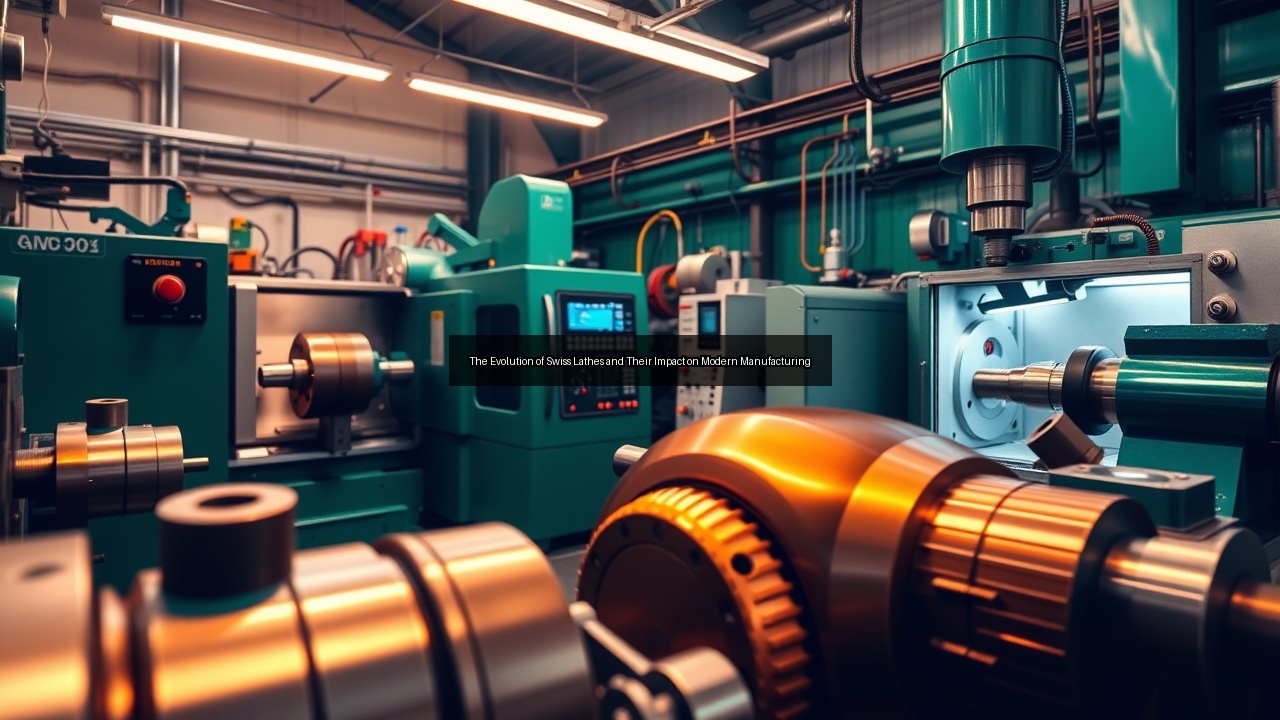
The Origins of Swiss Lathes
Historical Background of Swiss Screw Machining
Swiss screw machining emerged in the late 19th century as a revolutionary approach to precision metalworking. Watchmakers in Switzerland pioneered this technique to craft intricate components for timepieces, demanding tolerances down to microns. The process originated from the need to produce small, complex screws and parts efficiently without compromising accuracy. Early swiss screw machining relied on manual lathes that slid the workpiece along the spindle axis, minimizing tool deflection and enabling superior surface finishes. This method quickly spread beyond horology into broader manufacturing, where swiss lathes became essential for screw machined parts in instruments and machinery. By the early 20th century, companies specialized in swiss machining to meet growing demands for reliable, high-volume production of tiny metal components. The technique's roots in Swiss precision engineering laid the foundation for modern screw machine operations, influencing global standards in machining accuracy and efficiency.
Early Innovations in Lathe Technology
Inventors transformed basic lathe designs into sophisticated tools during the Industrial Revolution. The center lathe, a precursor to swiss lathes, allowed rotation of workpieces against cutting tools, but it struggled with slender parts prone to bending. Swiss innovators introduced the sliding headstock in the 1870s, which kept the cutting tool close to the collet, reducing vibration and enabling precise screw machining. This breakthrough in lathe technology supported the production of fine threads and drills on small diameters. Turret lathes soon followed, incorporating multiple tools for faster operations, yet swiss lathes excelled in handling delicate materials like brass and steel. These early advancements in metalworking lathes set the stage for automated screw machines, boosting productivity in factories across Europe and America. Engineers continually refined these innovations, integrating better spindles and guides to push the boundaries of what machining could achieve in precision environments.
The Role of Swiss Precision in Manufacturing
Swiss precision defined manufacturing excellence from its inception, establishing Switzerland as a hub for high-tolerance components. Swiss lathes facilitated the creation of parts integral to early electronics and medical devices, where even minor errors could render products useless. This precision stemmed from rigorous training of machinists and the inherent stability of swiss screw machining setups, which minimized thermal expansion and chatter. In broader manufacturing, swiss machining influenced quality control standards, inspiring industries to adopt similar exactitude. Screw lathes from this era produced components for bicycles, firearms, and automotive prototypes, accelerating technological progress. The emphasis on flawless finishes and dimensional accuracy in swiss lathe operations not only elevated product reliability but also reduced waste, making it a cornerstone of efficient metalworking. Today, that legacy persists in every precision-engineered part, underscoring the enduring impact of Swiss ingenuity on global production lines.
Key Features of Swiss Lathes
Understanding the Components: Tailstock and Barfeeder
The tailstock in swiss lathes provides essential support for longer workpieces, ensuring stability during operations like drilling and threading. Unlike traditional setups, the swiss lathe tailstock integrates seamlessly with the sliding mechanism, preventing deflection in slender bars. Meanwhile, the barfeeder automates material loading, feeding raw stock through the spindle for continuous production runs. This component revolutionizes swiss screw machining by minimizing downtime and enabling high-volume screw machined parts without manual intervention. In metalworking lathes, barfeeders handle various diameters, from 12mm to larger sizes, optimizing workflow in cnc lathe environments. Together, these elements enhance precision and speed, allowing operators to focus on complex tasks rather than material handling. Advanced barfeeders now feature sensors for automatic adjustments, further streamlining screw machine processes and reducing errors in demanding manufacturing scenarios.
Advantages of Y-Axis in Swiss Lathes
The y-axis in swiss lathes unlocks multidimensional machining capabilities, allowing tools to move perpendicular to the spindle for off-center features. This innovation expands swiss machining possibilities, enabling live tooling for milling and drilling directly on the lathe without secondary setups. In swiss screw machining, the y-axis boosts efficiency by integrating operations that traditional lathes handle separately, cutting production time significantly. Manufacturers benefit from reduced fixturing and improved part geometry, especially for intricate components in medical and electronics sectors. Compared to basic cnc lathes, the y-axis adds versatility, supporting complex profiles on small diameters like 16mm bars. This feature minimizes scrap rates and enhances surface quality, making swiss lathes indispensable for high-precision screw machine work. As technology advances, y-axis controls become more intuitive, empowering machinists to tackle diverse projects with unmatched accuracy.
Comparing Swiss Lathes with Traditional Metalworking Lathes
Swiss lathes outperform traditional metalworking lathes in precision for small, complex parts, thanks to their guide bushing that supports the workpiece near the tool. Center lathes and turret lathes excel in general turning but falter with slender stock, where vibration compromises accuracy. In contrast, swiss screw machining maintains tight tolerances during high-speed operations, ideal for screw machined components under 32mm. Traditional lathes require more setups for milling or threading, while swiss lathes combine these in one cycle via gang tooling. This efficiency shines in high-volume production, reducing costs over milling machines alone. However, swiss lathes demand skilled setup, unlike the forgiving nature of basic metalworking lathes. Overall, for industries needing micron-level precision, swiss lathes dominate, evolving from their roots to integrate cnc features that traditional designs struggle to match.
The Evolution of Swiss Screw Machining Techniques
Transition from Manual to CNC Swiss Lathes
The shift from manual to cnc swiss lathes marked a pivotal evolution in swiss screw machining, automating what once required expert hand-eye coordination. Manual screw machines, reliant on cams and levers, limited production to simple geometries and slower cycles. CNC technology, introduced in the 1980s, brought programmable controls, allowing rapid reprogramming for varied parts without mechanical alterations. This transition accelerated swiss machining speeds, enabling complex threading and milling on a single setup. Modern cnc lathes in swiss configurations handle bar stock up to 38mm, far surpassing manual limits. Operators now program intricate paths via software, boosting output while maintaining precision. The change not only scaled production for automotive and aerospace but also democratized access to high-end screw machine capabilities, transforming workshops worldwide into efficient, versatile facilities.
Integration of Milling and Threading in Swiss Machining
Integrating milling and threading into swiss machining streamlines workflows, producing fully finished parts in one operation. Swiss lathes with live tools perform milling for slots and flats alongside threading for screws, eliminating transfers to separate milling machines. This synergy enhances swiss screw machining efficiency, especially for components requiring precise cross-features on small diameters. Threading heads on swiss lathes cut internal and external threads with minimal tool changes, while milling spindles add perpendicular cuts via y-axis movement. In screw machining, this integration reduces cycle times by 30-50%, vital for high-volume runs. Advanced cnc controls synchronize these functions, ensuring concentricity and surface integrity. Manufacturers leverage this for custom screw machined parts in hydraulics and optics, where hybrid operations yield superior results over traditional lathe-milling sequences.
The Impact of 12mm and 16mm Specifications on Production
12mm and 16mm specifications in swiss lathes dictate bar capacity, profoundly influencing production scalability and part design. Machines handling 12mm stock excel in micro-precision screw machining for electronics and implants, where tiny features demand unwavering accuracy. Scaling to 16mm accommodates larger fasteners and fittings, broadening applications in plumbing and machinery without sacrificing speed. These sizes optimize material utilization in swiss screw machining, with guide bushings tailored to prevent whip and ensure clean cuts. Production impacts include faster setups for common diameters, reducing tooling costs and lead times. In high-output environments, 16mm capability supports diverse runs, from prototypes to mass production, while 12mm focuses on niche, high-value items. As demand grows, manufacturers select swiss lathes based on these specs to align with market needs, driving efficiency across global supply chains.
Modern Applications of Swiss Lathes in Manufacturing
Precision Machining in Aerospace and Automotive Industries
Precision machining via swiss lathes powers aerospace and automotive innovations, crafting components that withstand extreme conditions. In aerospace, swiss screw machining produces fuel nozzles and actuator pins with tolerances under 0.001 inches, ensuring flight safety and performance. Automotive applications include gearbox shafts and sensor housings, where 16mm swiss lathes deliver lightweight, durable parts for electric vehicles. The technique's ability to handle tough alloys like titanium via integrated milling and threading minimizes weight while maximizing strength. Screw machined parts from cnc swiss lathes reduce assembly steps, cutting costs in high-stakes industries. Case in point, suppliers use these machines for brake system fittings, achieving flawless threads and drills. This precision not only meets regulatory standards but also accelerates time-to-market, solidifying swiss machining's role in advancing transportation technologies.
The Use of Ejectors in Swiss Screw Machining
Ejectors in swiss screw machining automate part removal, enhancing throughput and part integrity. Positioned at the guide bushing end, these pneumatic or mechanical devices push completed workpieces out after cutting, preventing damage from manual handling. In high-speed operations, ejectors synchronize with the barfeeder to maintain continuous flow, crucial for screw machine efficiency on 12mm bars. They reduce cycle interruptions, allowing swiss lathes to produce thousands of identical screw machined parts daily. Advanced ejectors incorporate sensors to detect jams, minimizing scrap in precision environments. For delicate materials, soft-touch designs preserve surface finishes during ejection. This feature streamlines workflows in cnc lathe setups, from prototyping to full production, making swiss screw machining a go-to for volume-sensitive manufacturers seeking reliability and speed.
Case Studies: Tsugami and Other Leading Brands
Tsugami leads in swiss lathe innovation, with models like the B0206 excelling in multi-axis swiss screw machining for medical devices. This brand's cnc lathes integrate y-axis milling and threading, producing complex implants at rates exceeding 50 parts per hour. A case study from a U.S. medical firm shows Tsugami machines slashing lead times by 40% through automated barfeeding and ejectors. Citizen Machinery offers versatile swiss lathes for automotive, handling 16mm stock with precision threading for transmission components. Nexturn's affordable units democratize high-end screw machining, enabling small shops to compete globally. Star CNC's sliding headstock designs minimize vibration for aerospace pins, as seen in a supplier's 30% efficiency gain. These brands showcase how swiss lathes evolve, blending Japanese precision with user-friendly controls to dominate modern manufacturing landscapes.
Future Trends in Swiss Screw Machining
Advancements in Automation and CNC Technologies
Automation and cnc technologies propel swiss screw machining toward fully integrated smart factories. Robotic arms now load bars and unload parts, pairing with ai-driven cnc lathes to predict maintenance and optimize tool paths. In swiss lathes, advanced software enables real-time adjustments for varying material properties, enhancing screw machined accuracy on diverse alloys. Multi-tasking machines combine turning, milling, and even laser etching, reducing setups for 12mm to 16mm production. Industry 4.0 connectivity allows remote monitoring, boosting uptime in global operations. These advancements cut energy use and errors, making swiss machining more accessible for custom runs. As ai refines simulations, machinists focus on innovation, ensuring swiss screw machining remains at the forefront of efficient, high-precision manufacturing.
Sustainability in Swiss Machining Practices
Sustainability shapes swiss machining practices, emphasizing eco-friendly materials and processes in swiss screw machining. Manufacturers adopt coolant recycling systems in cnc lathes to minimize waste, while dry machining techniques reduce fluid consumption without sacrificing precision. Swiss lathes now use biodegradable lubricants for threading and milling, aligning with green standards in automotive and aerospace. Energy-efficient spindles and led lighting in screw machines lower carbon footprints during high-volume runs. Recycling programs for bar stock scraps support circular economies, especially for 16mm aluminum parts. Leading brands like Tsugami integrate sustainable designs, such as modular tooling to extend life cycles. These efforts not only comply with regulations but also appeal to environmentally conscious clients, positioning swiss screw machining as a responsible choice in modern industry.
The Growing Role of Swiss Screw Machining in Global Markets
Swiss screw machining expands its global footprint, fueling demand in emerging sectors like renewables and biotech. As supply chains localize, swiss lathes enable onshoring of precision parts, from wind turbine fittings to diagnostic tools. In Asia and Europe, cnc swiss machining hubs produce screw machined components for 5G infrastructure, leveraging y-axis versatility for compact designs. Market growth hits 7% annually, driven by miniaturization trends in electronics. Brands like Tsugami export advanced models, empowering developing markets to achieve Swiss-level precision. Challenges like skilled labor shortages spur automation, further globalizing access. Ultimately, swiss screw machining's adaptability strengthens international trade, delivering reliable parts that power innovation worldwide.